Showing posts with label kaasaegne Eesti joonistus. Show all posts

Sunday, September 25, 2011

ORDINARY. A DRAWING EXHIBITION

February 3 - March 6, 2011

Y Gallery, Tartu
May 9 - June 5, 2011

Gallery pART, Põltsamaa
October 2 - 31, 2011


Artists:
Ines Erlemann, Melina Herrero-Vilches, Kaie Kal, Kaij
a Kesa, Kaili-Angela Konno, Mari-Liis Laanemaa, Eva Luure, Joonmeedia (Tanel Rannala & Siiri Taimla), Kadi Pajupuu & Marilyn Piirsalu, Pastacas (Ramo Teder), Jaanika Peerna, Anna-Liisa Pärt, Lembe Ruben, Leho Rubis, Alide Zvorovski, Helen Tago, Indrek Tali & Triine-Anette Täks, Toomas Tõnissoo, Pille Õnnepalu.

Curated by Margot Kask.

Sound by Pastacas (Ramo Teder). 40''22'.

Drawing, need for drawing skills, different ways for drawing and even the definition of drawing has been under discussion lately on several occasions. The exhibition is based on the ordinary concept, in its many aspects. First, ordinary as “ordinary” lead pencil, which until two decades ago everybody used, also for writing, whenever there might have been necessary to erase the text afterwards or if there just wasn't any ball-point pen at sight. Then it's “ordinary” as something so common, that you don't notice its existence any more, but once its gone from your life, it suddenly appears to be very necessary. „Ordinary”, which both in sense of theme and tool is very personal. The artists participating at the exhibition, have tried to touch the limits of drawing, explore the possibilities of this medium. Exhibition includes drawings from schematic approach to precise description, from cognition-based to conceptual. Drawing Media artists Tanel Rannala and Siiri Taimla present ten interviews with drawing teachers and students, to find out the current state of drawing at Estonian art universities: if and what should be taught at drawing department?

Reet Varblane,
Curator at Tallinn Art Hall


The ordinary (lead pencil)

Today there's nothing ordinary in ordinary lead pencil, it's used daily only by first-grade children, art students and carpenters.

Charcoal and lead pencil are the cheapest tools to make art. Line drawn by charcoal or lead pencil can easily be erased, turn back to nothingness. Both factors are the reasons why rehearsal is the co-meaning of drawing – practicing and planning.

Drawing can be direct.
Drawing is a materialized trail of a thought. Thus, drawing is always a reprise of something, either based on random, accidental stream of consciousness, carefully considered and selected object or idea developed in detail. Image is a tool, which allows to observe, manage and develop the content of the depicted better.
Drawing can be a research. Phenomena and activities surrounding us on a daily basis and with which we are therefore used to, are sensed as ordinary. Some of them we don't notice at all. A closer examination shows the relations of cause and effect binding them and then those same familiar phenomena wont seem so trifling any more. The purpose of reprise, which seemed so drab, is mostly organizing, necessary for primary life processes, even survival.
The word „ordinary” is based on customs and rites – repeating activities. Most of the events called special or gained extra attention are highlighted because of their liminality – crossing boundaries, determination. In the context of cause and effect, every action becomes decisive for something.

As an expression, every drawing is unique. Expression is an essential presentation. Ideally presentation is a game – conscious, creative, experimenting and of course communicating act.

Margot Kask,
curator of the exhibition


Following is a brief overview of works included at the exhibition. Further information about each work can be obtained by clicking the name of the artist on the right hand side of the page.

Alide Zvoroski. Isolator, 2011. Graphite on paper, tin tube.

Eva Luure. Self-portrait, 2007. Video, 3'43''.

Indrek Tali & Triine Anette Täks. Echoes of the Universe, 2011.
Charcoal on wall, sound in headphones, dimensions variable.
Installation view from Y Gallery, Tartu.

Ines Erlemann. Ordinary Exercise, 2010. Video, 5'36''.

Jaanika Peerna. Ordinary sea H, 2010. Graphite on vellum, 92 x 30 cm. Detail.

Jaanika Peerna. Maelström series, 2010-2011.
Wax pencil on mylar, 92 x 92 cm, frames 102 x 102 cm.

Drawingmedia (Tanel Rannala & Siiri Taimla). Creativity and/or fear. 15 interviews on purposes and options of drawing studies with drawing teachers, students and curators. Installation view from Tallinn Art Hall Gallery.

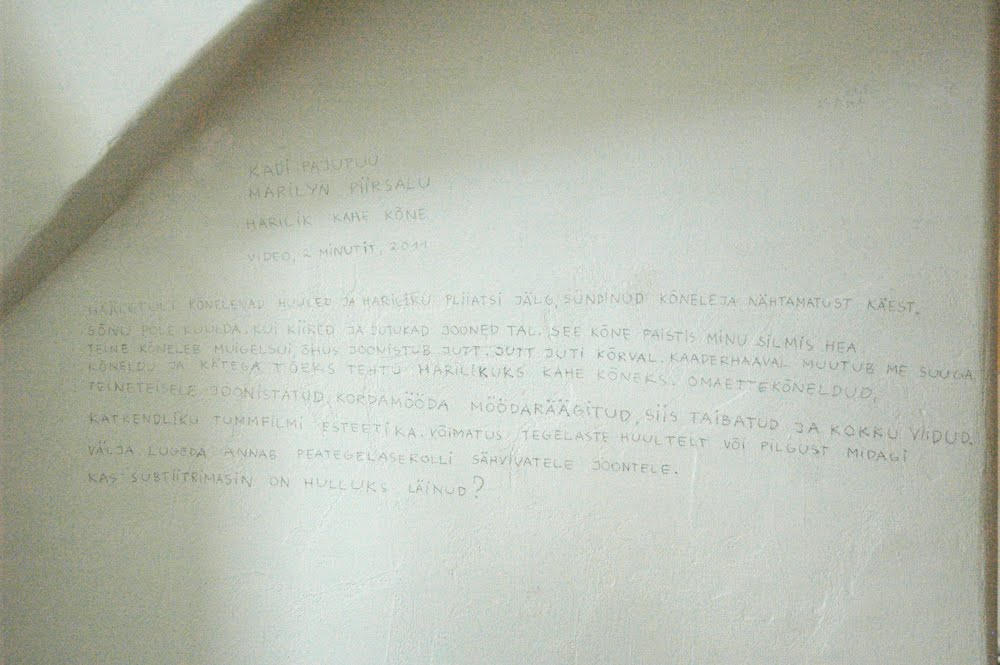
Kadi Pajupuu & Marilyn Piirsalu. Ordinary dialogue, 2011. Video, 2''.

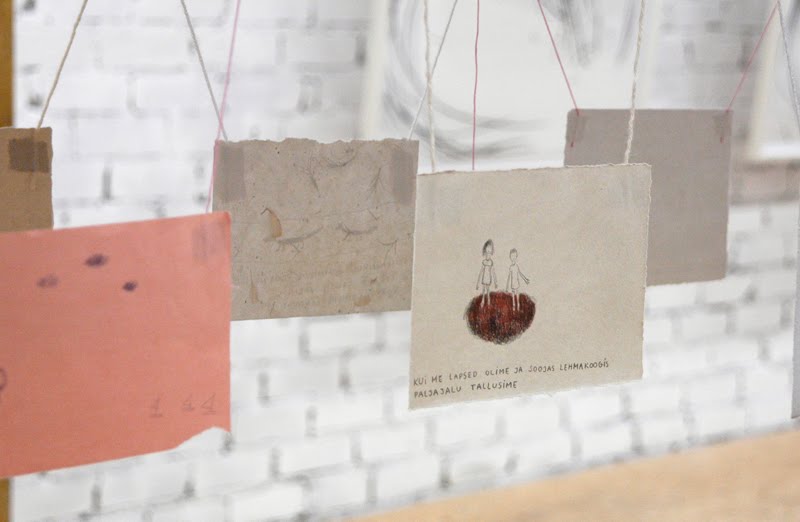
Kaie Kal. Untitled, 2011. Graphite and colour pencil on paper and cardboard, rope.

Kaija Kesa. Embroidered botany, 2011. Graphite, Japanese paper, 30 x 30 cm each.

Kaili-Angela Konno. Core, 2011. Graphite and rust on sheet metal, 200 x 102 cm.

Lembe Ruben. Exercises for a blue pencil, 2011. Colour pencil on paper, 21 x 29,7 cm each.

Lembe Ruben. Mother 24, 2011. 24 graphite drawings on paper, 42 x 29,7 cm each, nails.
Installation view from Y Gallery, Tartu.

Pastacas (Ramo Teder). Ball-point pen drawings, some from 2005-2009, most from 2010 and some from 2011. Ball-point pen on paper, 21 x 29 cm, 29 x 42 cm.
Installation view from Y Gallery, Tartu.

Toomas Tõnissoo. Ramps, 2011. Graphite, plywood, wood, sand, oil. Ca 110 x 140 x 25 cm.
Installation view from Tallinn Art Hall Gallery.

All photos by Margot Kask.

Tuesday, September 13, 2011

Ines Erlemann

Ordinary Exercise, 2010
video, 5'36''

A child writes a word and erases it. Writes and erases, until the paper gives up.
For that moment, when the paper gives up, the child has learned how to write.

To delete a line takes twice as long as to write it.


Video can be seen here.

/

Harilik harjutus, 2010
video, 5'36''

Laps kirjutab sõna ja kustutab selle ära.
Kirjutab ja kustutab, kuni lõpuks paber annab alla.
Hetkeks, mil paber alla annab, on laps kirjutamise selgeks saanud.

Iga tõmmatud joone kustutamiseks kulub kaks korda rohkem aega kui selle kirjutamiseks.


Videot saab vaadata siin.


Views of the exhibition in Y Gallery, Tartu, May - June 2011.
In the foreground, there are works by Toomas Tõnissoo.

Bio

Ines Erlemann was born in 1977 in Võru, Estonia. Lives and works in Tallinn, Estonia. Studied at the Estonian Academy of Arts, graduated 2003 with BA in Printmaking. Major exhibitions since 2003. Selected exhibitions: 2011 "Harilik" (Ordinary) at the Y Gallery, Tartu and Tallinn Art Hall; 2010 "Antagonisms" at the Tallinn Art Hall; group exhibition „In honor to Arvo Pärt music“ at Paide City Gallery; personal exhibition at Ministry of Agriculture “Between two lungs”; 2010 group exhibition „Kos sa olõt?/Where are you?” at the Võru City Gallery; 2010 personal exhibition „That’s not it“ at the Pärnu Concert Hall; 2009 group exhibition „Kiri“(Letter) at the Võru City Gallery and the National Library of Estonia, Tallinn; 2009 exhibition „International portraits“ in Mauritius; 2009 exhibition „Vabaduse väljak 6-36“.
Ines Erlemann´s art is focused on emotions and relations between people, attitude to each other, surroundings and family, and all kind of sensitive themes. Favorite techniques are dry point, relief print and lino cut. Currently active as a freelancer in creative artists community „Loovala“ (Creative Area), a group atelier in Tallinn.
http://www.graafika.ee/graafikud_07.html
http://iseineslik.blogspot.com/

/

Ines Erlemann (sünd. 1977 Võrus) elab ja töötab Tallinnas. Õppinud Eesti Kunstiakadeemias (BA – 2003 vabade kunstide osakond, graafika eriala). Näitustel osaleb aastast 2003. Olulisemad näitused: 2011 “Harilik” Y Galerii, Tartu ja Tallinna Kunstihoone galerii; 2010 “Vastandumised” Tallinna Kunstihoone; 2010 A. Pärdile pühendatud näitus Paides; 2010 personaalnäitus “Kahe kopsu vahel” Põllumajandusministeeriumis; 2010 Vana-Võromaa kunstnike näitus „Kos sa olõt?“ Võru Linnagaleriis; 2010 personaalnäitus „See pole see“ Pärnu Kontserdimajas; 2009 Grupinäitus „Kiri“ Võru Linnagaleriis ja Eesti Rahvusraamatukogus; 2009 osalemine grupinäitusel „International portraits" Mauritiusel; 2009 ühisnäitus „Vabaduse väljak 6-36“ (koos Eveli Variku ja Alide Zvorovskiga).

Loomingus domineerivad emotsioonid ja tundelised teemad, huvi pakuvad inimeste vahelised suhted ja suhtumine ümbritsevasse, üksteisesse, perekonda. Lemmiktehnikateks on kuivnõel, kõrgtrükk, linoollõige. Hetkel aktiivne vabakutseline kunstnik kunstnike koosluses Loovala.
http://www.graafika.ee/graafikud_07.html
http://iseineslik.blogspot.com/

Jaanika Peerna. Ordinary sea / Harilik meri

Ordinary sea H, 2010
Ordinary sea HB, 2010
Ordinary sea 3B, 2010
graphite on vellum, 92 x 30 cm

/

Harilik meri H, 2010
Harilik meri HB, 2010
Harilik meri 3B, 2010
grafiit kilepaberil, 92 x 30 cm

Joonistamine on joon. Nii lihtne, vahetu ja selge. Näha on käe liikumise trajektoor, mõtte kulg ning millegi eimillegist ilmumise protsess.
Ma joonistan, sest see on lihtne, tasane kuid võimas vahend. Joonistades on raske valetada. Iga käega paberile pandud joon on unikaalne ja meie ajas on sel ehk eriline tähendus.
Mu enda joonistused on praegusel ajal enamasti kaardistused loodusjõudude dünaamilistest protsessidest. Vahel joonistan kiiremini kui mõte liikuda jõuab. Vahel taas nii aeglaselt, et joone tegemise protsessis mõtteprotsess rahustub ning taandub. Jääb vaid joon, tähenduse ning funktsioonita, kuid ometi kindlalt olemas.

Harilik on tavamõistes voogamine, mis on märkamatu. Mulle meeldib kui harilikkusest ollakse nii teadlik, et see muutub mitte-harilikkuseks - et nö harilikud asjad saavad sellise tähelepanu, et osutuvad erilisteks.


Views from Tallinn Art Hall Gallery, 2011.

/

Jaanika Peerna kolm merd („Harilik meri H“, „Harilik meri B“ ja „Harilik meri 3B“) väljendavad ratsionaalse ja irratsionaalse suhteid – ebaühtlased vabakäejooned on üksteisest eraldatud sirgete lõigete abil. Joonistamise ajal pliiatsi survest lähtuvad heletumeduse erinevused loovad sellegipoolest neid jooni omavahel ühendava rütmi ja paberiribade vajudes sulanduvad need lihtsad vastandid ühtseks tervikuks, justkui mitutpidi lainetavaks mereks.
Teisalt, palju kaudsemalt, võib selles töös näha viidet vahemaale kunstniku praeguse New Yorgis oleva elukoha ja Eestis oleva lapsepõlvekodu vahel.

Margot Kask


Bio
Jaanika Peerna is an Estonian born artist living and working in New York since 1998. Her work encompasses drawings, videos and light installations often dealing with the theme of transitions in light, air, water and other natural phenomena. She has an MFA in intermedia design from State University of New York, and has worked as teaching artist at DIA:Beacon, NY and the Visual Thinking Strategies project of the Soros Foundation. She has exhibited her work extensively since 2001 in entire New York metropolitan area as well as in Honolulu, Washington DC, Paris, Lisbon, Tallinn, Rome and Sofia.
Her 2011 exhibitions include International Paper Art Biennial in Sofia, Bulgaria, solo exhibition at Estonian Embassy in Washington DC and group exhibition Liberté at Chateau d'Asnières in Paris. Her work is represented in USA by Masters and Pelavin Gallery, A.R.C Fine Art and in Europe at ArtDepoo Gallery.


Kadi Pajupuu & Marilyn Piirsalu

Ordinary dialogue, 2011
video, 2''

Soundless lips talking silence, track of a graphite pencil, moved by the invisible hand. Words spoken can not be heared. How fast are the lines, how chatty. The speech was good in my eyes. The Other is talking half-smile, story unraveling in the air. Line by line, forming plot. Shot by shot the story told by lips and truth drawn by hand turn into ordinary dialogue. Told to oneself, drawn to each other, taking turns, mis-spoken, mis-understood, then grasped and united.
Esthetics of a silent movie. Impossibility to read from lips or eyes gives an advantage to the moving lines, who become head-characters. The subtitle machine gone mad.

Video can be viewed here.

/

Harilik kahe kõne, 2011
video, 2''

Hääletult kõnelevad huuled ja hariliku pliiatsi jälg, sündinud kõneleja nähtamatust käest. Sõnu pole kuulda. Kui kiired ja jutukad jooned tal. See kõne paistis minu silmis hea. Teine kõneleb muigelsui, õhus joonistub jutt. Jutt juti kõrval. Kaaderhaaval muutub me suuga kõneldu ja kätega tõeks tehtu harilikuks kahe kõneks. Omaettekõneldud, teineteisele joonistatud, kordamööda möödaräägitud, siis taibatud ja kokku viidud.
Katkendliku tummfilmi esteetika. Võimatus Tegelaste huultelt või pilgust midagi välja lugeda annab peategelaserolli sähvivatele joontele. Kas subtiitrimasin on hulluks läinud?

Videot saab vaadata siin.


Exhibition views from Y Gallery, Tartu, 2011.

Bio

Marilyn Piirsalu was born in Tallinn in 1981, 2004 graduated from the Estonian Academy of Arts as graphic artist. Has participated in exhibitions since 2002.
Uses graphic art, drawing, photo and video to express her views on life and investigate processes that she finds intriguing.

Kadi Pajupuu was born in Tallinn in 1963. Graduated from the Estonian Academy of Arts as textile artist. Several solo and group exhibitions in Estonia, Finland, Lithuania, Sweden, Poland, Russia. Likes to work with hand-drawn and photographic images and texts, mostly from old versions of Bible, because of the strange sound of how things were said centuries ago, weaves wooden tapestries. Works as lecturer at Tartu Art College.

Kaie Kal

Untitled, 2011
graphite and colour pencil on paper and cardboard, rope

Really met people, animals, birds and insects.
Really happened stories.


/

Nimeta, 2011
grafiit ja värvipliiats paberil ja papil, lõng

Päriselt trehvatud inimesed, loomad, linnud ja putukad.
Päriselt juhtunud lood.

Two crows together nicely on a branch. December.

Finch. Woodpecker. And tit. On Tartu Rose apple tree.

At half past three in a December morning,
two foxes walked in Pärnu, along Voorimehe Street.

Installation views from Y Gallery, Tartu.
On the right, there is an object by Toomas Tõnissoo. /
Installatsionivaated Y galeriist Tartus.
Alumise pildi paremal serval on Toomas Tõnissoo objekt.

When I came from Tartu and the bus driver told me that look,
the sky is so beautiful. January.

Installation views from pART gallery, Põltsamaa, October, 2011. /
Installatsioonivaated pART galeriist Põltsamaal.


Bio

Kaie Kal has graduated from the Estonian Academy of Arts Stage Design Department. Designs theater stages and costumes. Designs studios. Illustrates books. Paints and draws.

/

Olen lõpetanud EKA lavakujunduse eriala.
Teen lava- ja kostüümikujundusi. Stuudiokujundusi. Illustreerin raamatuid. Maalin ja joonistan.

Kaili-Angela Konno

Core, Cataract, 2011
graphite on galvanized iron, 200 x 102 cm each

/

Tuum, Kosk, 2011
grafiit tsinkplekil, 200 x 102 cm


Exhibition views from Tallinn Art Hall Gallery. /
Näitusevaated Tallinna Kunstihoone galeriist.

Exhibition views from pART Gallery, Põltsamaa. /
Näitusevaated pART galeriist Põltsamaal.


Common human, common man, common woman, common day, common food, common home, common life.
Everyday being, things, people, activities, routine what turn you dull, does not excite. Gray weekday, where we are living in. This is the basic quality, we have to bless it, notice the singularity - now and then, every day, every moment.

And then there is a point and a line. As you notice the point, you see it opening to endlessness from here. And the line what connects two different levels. Free fall with standstill.

[Drawing is...]
revealing, sensitive, proximate.

/

Tavaline inimene, tavaline mees, tavaline naine, tavaline päev, tavaline toit, tavaline kodu, tavaline elu. Harilik inimene, harilik mees, harilik naine, harilik päev, harilik toit, harilik kodu, harilik elu.
Igapäevane olemine, asjad, inimesed, tegevused, rutiinsus, mis muudab tuimaks, ei eruta. Hall argipäev, milles elame. Neis ongi põhiline väärtus, mida peame pühitsema ja mille ainulaadsust märkama - ikka ja jälle, iga päev, iga hetk.

Ja siis on üks punkt ja joon. Punkt, mida märgates järsku näed, kuis ta avaneb lõpmatuseks siitsamast. Ja joon, mis ühendab kahte erinevat tasapinda. Vaba langemine paigalseisuga.

[Joonistus on ...]
Paljastav, tundlik, vahetu.


Bio

Kaili-Angela Konno is born in 1970, lives and works in Tallinn.
She has studied at the Dance and Pantomime School, Pärnu Sütevaka Private High School of Humanities Department of Arts, Estonian Academy of Arts Painting Department.
Main acting field is painting, at times she has designed TV-studios, made woodcuts, drawings, illustrations for magazines.
She has exhibited at solo and group exhibitions in Estonia since 1997.

Lembe Ruben. MUM24 / EMA24

MUM24, 2011

24 graphite drawings on paper, each 42 x 29,7 cm, iron nails

24 views on baby tights in different moods and weathers.

/

EMA24, 2011
grafiit paberil, iga 42 x 29,7 cm, naelad

24 vaadet beebi sukkpükstest erineva tuju ja ilmaga.


Exhibition view from Y Gallery, Tartu.


Installation views from pART gallery, Põltsamaa. /
Installatsioonivaated pART galeriist Põltsamaal.


Bio

Lembe Ruben (born in 1974) lives and works in Tallinn. She has graduated from the Estonian Academy of Arts graphic arts department. Then she got Master of Arts degree in fine arts.
The technique of her works is graphic art and drawing. Her grotesque figures are mostly with minimalistic lines. In graphic arts she expresses herself in handmade techniques: relief print, copper etching and dry-point.
Ruben has participated exhibitions in Estonia, Denmark, Germany, Japan, Finland, Sweden, Russia, Czech, Latvia and Lithuania. She obtained Wiiralt prize of young artist in 2011. Her works can be found in state art museums of Estonia and Denmark.
She has taught graphic arts, drawing and composition at the Estonian Academy of Arts and different hobby groups; designed and illustrated books and magazines; dealt with animation and stage decoration.
http://lemberuben.wordpress.com/